

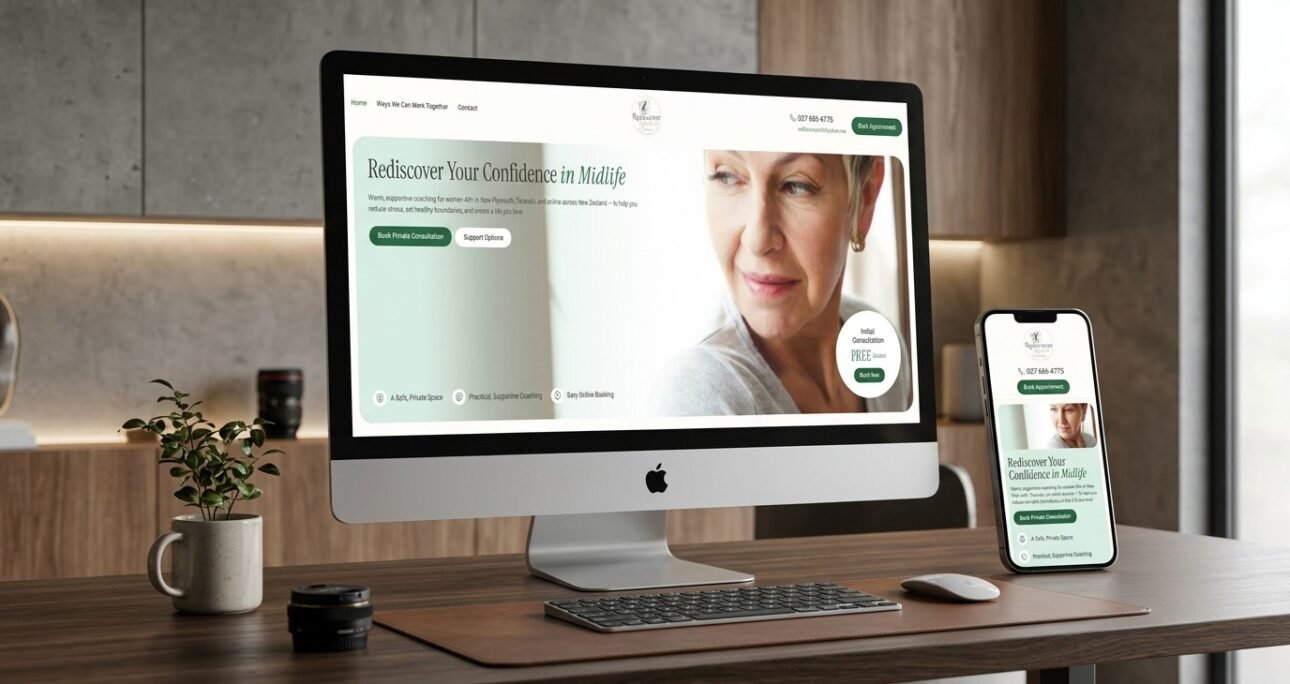
Having a website is important, but on its own, it is not always enough to help your business get found online.
These days, people often discover a business through Google, maps, social media, online reviews, or a recommendation before they ever visit the website. Your online presence needs to work together so potential customers can find you, understand what you offer, and feel confident getting in touch.
A website is your digital home
Your website is the place where people can learn more about your business in your own words.
It should clearly explain:
- What you do
- Who you help
- Where you are located
- What makes your business different
- How people can contact you
A professional website also gives your business credibility. If someone searches for your business and finds an outdated website, incomplete information, or nothing at all, they may question whether you are still operating or whether your business is right for them.
People need to be able to find you
A great website does not help much if nobody can find it.
Google continues to be one of the main ways people search for local businesses and services. Customers may search for phrases such as:
- Website designer in New Plymouth
- Event equipment hire in Taranaki
- Counselling in New Plymouth
- Local builder near me
This is where local search engine optimisation, or local SEO, becomes important.
Your website should include useful information about your services and location, while your Google Business Profile should provide accurate contact details, opening hours, photos, reviews, and links to your website.
Your Google Business Profile matters
For local businesses, a Google Business Profile can be just as important as the website itself.
It can help your business appear in Google Search and Google Maps when people are looking for the products or services you provide.
A complete profile should include:
- Your correct business name
- Address or service area
- Phone number
- Website address
- Opening hours
- Business category
- Current photographs
- Customer reviews
- Regular updates where appropriate
It is also important to keep this information accurate. If your phone number, location, or opening hours are wrong, a potential customer may move on to another business.
Your content should speak to your customers
One of the biggest mistakes I see is websites that focus only on what the business does, rather than what the customer needs.
People want to know:
- Can you help with my problem?
- Have you worked with people like me?
- What can I expect?
- How much information do I need to get started?
- How do I contact you?
Your website content should answer these questions clearly and naturally.
This does not mean filling every page with complicated SEO phrases. It means writing helpful content that reflects the real questions your customers are asking.
Reviews help build trust
Online reviews are an important part of the decision-making process.
Many people will compare several businesses before making contact, and reviews can help them understand what it is like to work with you.
Encourage genuine customers to leave honest feedback on your Google Business Profile. You can also display selected testimonials on your website, as long as they are accurate and used with permission.
Reviews should not replace good service, but they can help potential customers feel more confident taking the next step.
Your website needs to work on mobile
A large number of people browse and search from their phones. If your website is difficult to use on a smaller screen, visitors may leave before contacting you.
A mobile-friendly website should have:
- Easy-to-read text
- Clear navigation
- Buttons that are simple to tap
- Fast-loading pages
- Contact details that are easy to find
- Forms that work properly on mobile devices
A website should make things easier for your customers, not create another barrier.
Social media is not a replacement for your website
Social media can be useful for sharing updates, showing your work, and staying connected with your audience. However, it should not be the only place your business exists online.
Social media platforms change regularly, and you do not control how your content is shown. Your website gives you a more permanent and professional place to direct people.
The best approach is to use social media to support your website, rather than relying on it completely.
Your website should make the next step clear
Once someone has read about your business, what should they do next?
A good website makes the answer obvious. Depending on your business, that might be to:
- Send an enquiry
- Request a quote
- Book a consultation
- Make a phone call
- Visit your premises
- View your services
- Sign up for updates
Clear calls to action help visitors move from simply browsing to taking action.
A complete online presence works together
Your website, Google Business Profile, reviews, social media, and online content should all support one another.
For example:
- Someone searches for a local service on Google.
- They find your Google Business Profile.
- They read your reviews and visit your website.
- They find clear information about your services.
- They contact you because they feel confident you can help.
Each part of the journey matters.
Final thoughts
Your website is an important starting point, but it is only one part of your online presence.
To attract the right customers, your business needs to be easy to find, clearly communicate what it offers, and provide a trustworthy experience across every online touchpoint.
Whether you are starting from scratch or your current website no longer reflects your business, the goal should always be the same: create an online presence that works for your customers and helps them take the next step.
If you need help with a website, content, local SEO, or setting up your Google Business Profile, get in touch. A strong online presence starts with making sure your customers can find you.